
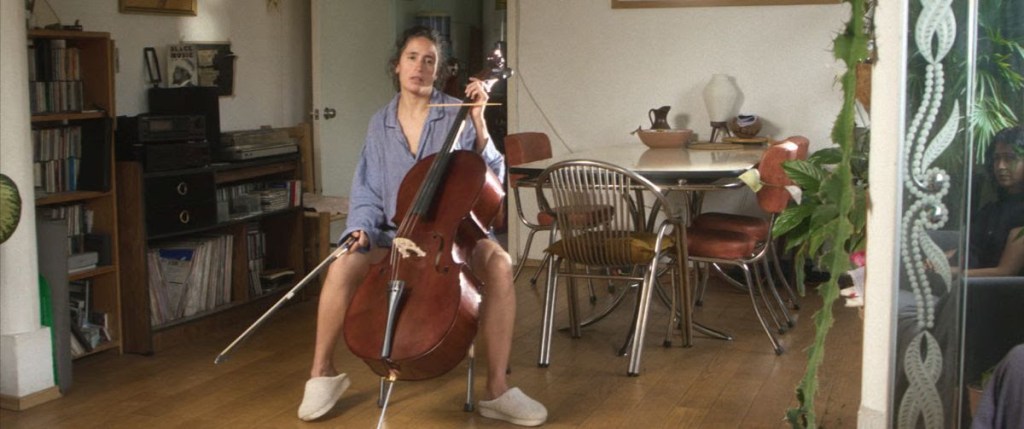
Nicolás Pereda‘s Everything Else Is Noise (Lo demás es ruido) has unveiled a trailer ahead of its North American premiere in the Wavelengths section of the 51st Toronto International Film Festival (TIFF), followed by its U.S. premiere in the Main Slate of the 64th New York Film Festival (NYFF).
Pereda’s latest feature marks a significant moment in the career of one of Mexican cinema’s most prolific and singular contemporary voices.
A sharply observed deadpan comedy set largely within a Mexico City apartment, the story follows Rosa, a middle-aged contemporary music composer who secretly agrees to shoot her first television interview at the home of her colleague Tere. What should be a routine profile by a visiting TV crew quickly goes off the rails. Disrupted by power outages, a barking dog, and the sudden arrival of Tere’s daughter Luisa, the interview gives way to family anecdotes, impromptu musical performances, and old rivalries.
As the interview unravels, conversations about music, family, work, and ambition take its place. What begins as a portrait of one artist gradually becomes something richer and funnier, revealing the expectations and biases women encounter in creative fields and the different ways they learn to navigate them. The interruptions and digressions that frustrate the television crew ultimately prove more revealing than the interview itself.
Reuniting with his longtime troupe of collaborators—including Teresita Sánchez, Luisa Pardo, Lázaro G. Rodríguez, and Francisco Barreiro—Pereda employs static compositions, extended takes, and an economy of means to move effortlessly between naturalism, deadpan humor, and subtle absurdity. Street noise, barking dogs, family dynamics, and professional egos all become part of the film’s playful exploration of creativity and artistic prestige—and of who gets taken seriously as an artist.
Beyond its situational humor, Everything Else Is Noise explores how social expectations and gender dynamics shape the lives of women artists across generations. A precise and incisive study of the fragility of prestige and the strength of quiet resistance, the film distills many of the hallmarks of Pereda’s cinema—his fluid interplay between performance and everyday life, understated humor, minimalist form, and recurring ensemble of actors—into one of his funniest and most immediately engaging works to date.






Leave a Reply